
Product Introduction
1. Product Introduction
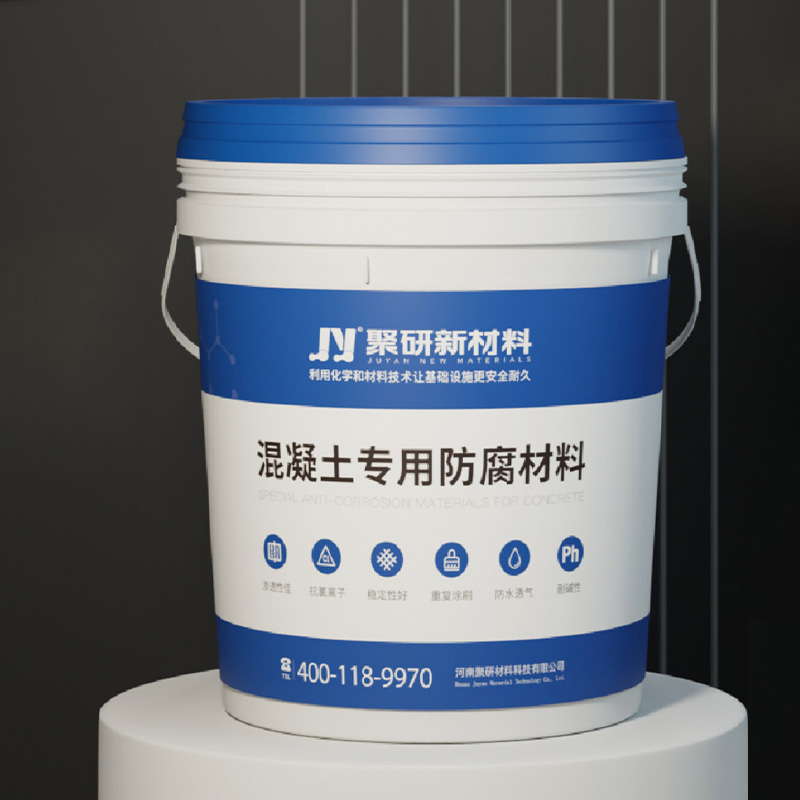
This technology is based on nano-molecular silane materials and provides three-dimensional protection for concrete structures through a complete immersion method. Silane molecules penetrate into the pores of concrete and form a permanent protective layer via chemical bonding. It can effectively prevent water and water-borne harmful substances from eroding concrete, and effectively improve the concrete's freeze-thaw resistance and chloride ion resistance.
This technology is based on nano-molecular silane materials and provides three-dimensional protection for concrete structures through a complete immersion method. Silane molecules penetrate into the pores of concrete and form a permanent protective layer via chemical bonding. It can effectively prevent water and water-borne harmful substances from eroding concrete, and effectively improve the concrete's freeze-thaw resistance and chloride ion resistance.
2. Product Features
-Excellent permeability, can penetrate deep into the concrete material, protect the internal structure of the substrate from water damage.
Ideal anti-chlorine ion penetration ability, can effectively reduce chlorine ion penetration by more than 90%.
-Chemical reaction with inorganic silicate base material to form a stable reticulated silicone resin structure.
-The service life is the same as that of the protected concrete.
-Excellent water resistance and alkali resistance, water absorption ratio <7.5%; soaked in 0.1M NaOH solution for 24h, water absorption ratio <10%.
-It does not change the appearance of concrete structure, especially suitable for surface protection of fair-faced concrete.
-It can also be used for the protection of brick, stone, rammed earth and other buildings.
-Simple construction method, can be repeated painting.
-Excellent permeability, can penetrate deep into the concrete material, protect the internal structure of the substrate from water damage.
Ideal anti-chlorine ion penetration ability, can effectively reduce chlorine ion penetration by more than 90%.
-Chemical reaction with inorganic silicate base material to form a stable reticulated silicone resin structure.
-The service life is the same as that of the protected concrete.
-Excellent water resistance and alkali resistance, water absorption ratio <7.5%; soaked in 0.1M NaOH solution for 24h, water absorption ratio <10%.
-It does not change the appearance of concrete structure, especially suitable for surface protection of fair-faced concrete.
-It can also be used for the protection of brick, stone, rammed earth and other buildings.
-Simple construction method, can be repeated painting.
3. Performance Indicators
| Item | Index |
|---|---|
| Main Component | Isooctyl Triethoxysilane Paste |
| Effective Component Content, % | 80 |
| Odor | No obvious pungent odor or slight ethanol odor |
| Density (25°C), g/cm³ | 0.9±0.1 |
| pH Value | 7±1 |
| Chloride Ion Content, g/m³ | <100 |
| Drying Coefficient, % | 30 |
| Water Absorption Ratio, % | <7.5 |
| Alkali Resistance, % | Water absorption ratio <10 after alkali treatment |
| Chloride Ion Absorption Reduction Rate, % | 90 |
| Penetration Depth, mm - ≤C45 Concrete | 3~5 |
| Penetration Depth, mm - >C45 Concrete | 2~3 |
| Salt Freeze Resistance (w/c=0.7 Concrete) | At least 25 more cycles in salt solution than the reference concrete |
4. Construction Process
-Material preparation
Silane impregnated concrete protection material: original tank sealed and within the expiry date.
Silane:
Impregnated liquid: can be applied by brushing, spraying, semi-mechanical spraying tools are recommended.
Paste: can be rolled, brushed, sprayed construction, it is recommended to use airless spraying equipment.
Silane impregnated concrete protection material: original tank sealed and within the expiry date.
Silane:
Impregnated liquid: can be applied by brushing, spraying, semi-mechanical spraying tools are recommended.
Paste: can be rolled, brushed, sprayed construction, it is recommended to use airless spraying equipment.
It seems that there is no source text provided for translation. Please provide the text you would like to have translated into English, and I will be happy to assist you.Concrete surface pretreatment (before silane impregnation)
Remove surface debris and unsound attachments, repair obvious defects such as honeycomb and exposed stones with repair mortar; carbonised concrete needs to be chiseled out of the carbonised part and then repaired with repair mortar.
Remove dust, oil and other harmful substances and pollutants that are not conducive to silane impregnation.
It is better to spray silane on the surface of dry concrete; when working in the water level change area, spraying should be done when there is no water on the surface of the concrete and there is a drying period of 3-6 hours, and it is not allowed to spray when it rains.
Do not apply silane protection materials until the concrete has had a full curing period.
The surface temperature of concrete should be 5-45℃.
Remove surface debris and unsound attachments, repair obvious defects such as honeycomb and exposed stones with repair mortar; carbonised concrete needs to be chiseled out of the carbonised part and then repaired with repair mortar.
Remove dust, oil and other harmful substances and pollutants that are not conducive to silane impregnation.
It is better to spray silane on the surface of dry concrete; when working in the water level change area, spraying should be done when there is no water on the surface of the concrete and there is a drying period of 3-6 hours, and it is not allowed to spray when it rains.
Do not apply silane protection materials until the concrete has had a full curing period.
The surface temperature of concrete should be 5-45℃.
-Construction site requirements
should be free of open flame, the operator should use the necessary safety protection facilities.
should be free of open flame, the operator should use the necessary safety protection facilities.
-Spraying method and dosage
It should be implemented by continuous spraying, and generally it needs to be sprayed twice to meet the spraying amount required by the design documents; in general, 400g/㎡ can guarantee the effect.
It should be implemented by continuous spraying, and generally it needs to be sprayed twice to meet the spraying amount required by the design documents; in general, 400g/㎡ can guarantee the effect.
-Precautions
Silane will be fully absorbed by the concrete in about 4 hours after the construction, and the concrete impregnated with siloxane before this time should avoid contacting with water; it takes two weeks for siloxane to fully react with the concrete to form a silicone resin network, and the test effect experiment should be carried out two weeks or more after the construction.
Silane will be fully absorbed by the concrete in about 4 hours after the construction, and the concrete impregnated with siloxane before this time should avoid contacting with water; it takes two weeks for siloxane to fully react with the concrete to form a silicone resin network, and the test effect experiment should be carried out two weeks or more after the construction.
5. Fields of Application
- Waterproofing and anticorrosion treatment of assembled bridges (requiring protection against chloride ions)
- Freeze-thaw treatment of concrete bridges
- Freeze-thaw treatment of concrete in airports
- Special buildings (buildings, farms, tofu factories, etc.)
- Waterproofing and anti-corrosion treatment of concrete structures for water supply hubs
- Waterproofing treatment of rammed earth buildings (5% cement content, required to maintain original appearance)
- Waterproofing and anticorrosion treatment of assembled bridges (requiring protection against chloride ions)
- Freeze-thaw treatment of concrete bridges
- Freeze-thaw treatment of concrete in airports
- Special buildings (buildings, farms, tofu factories, etc.)
- Waterproofing and anti-corrosion treatment of concrete structures for water supply hubs
- Waterproofing treatment of rammed earth buildings (5% cement content, required to maintain original appearance)