
Product Introduction
1. Product Introduction
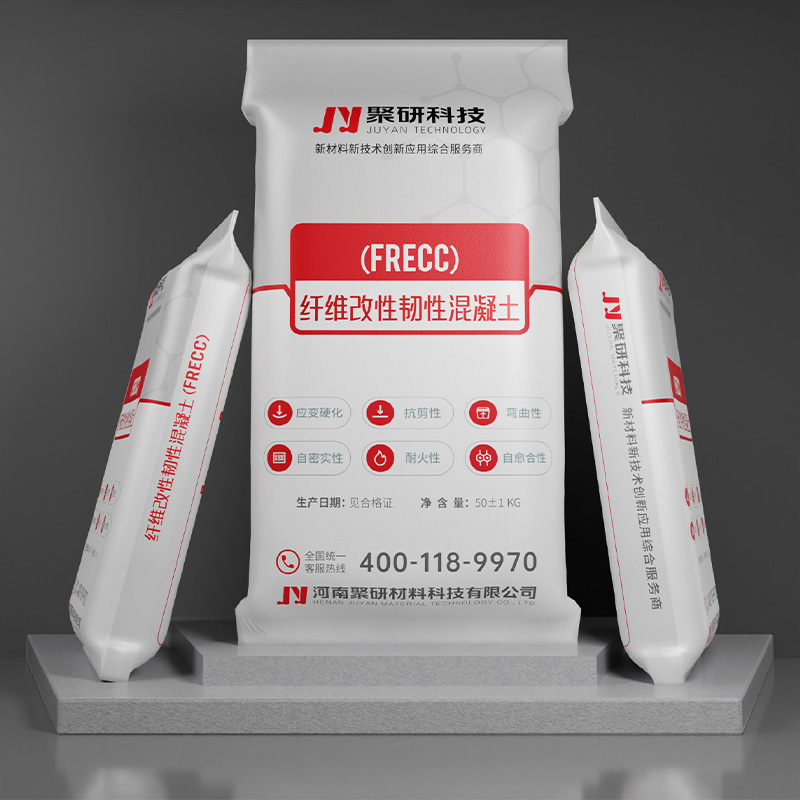
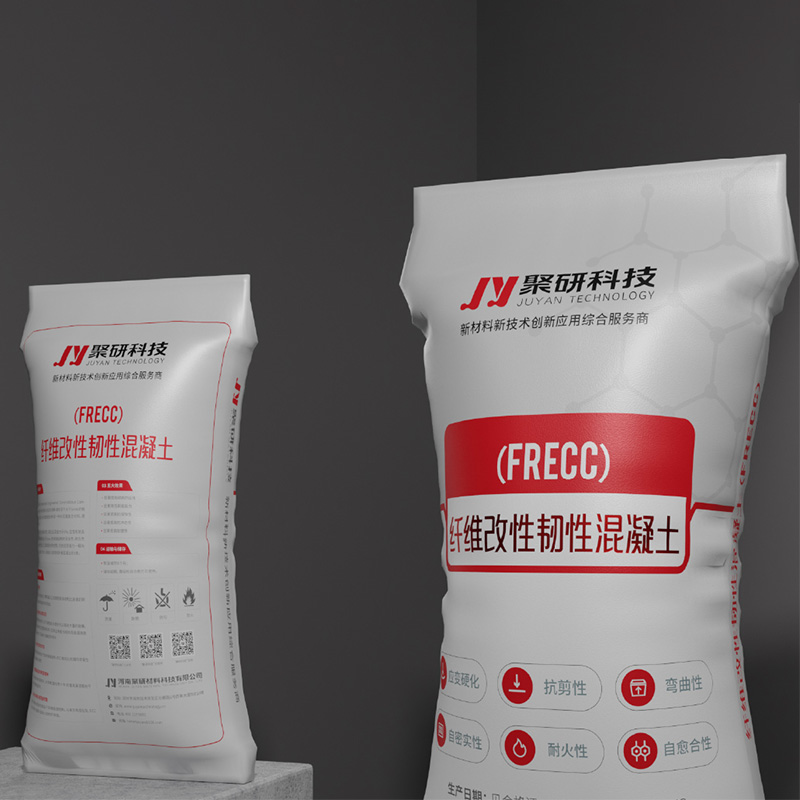
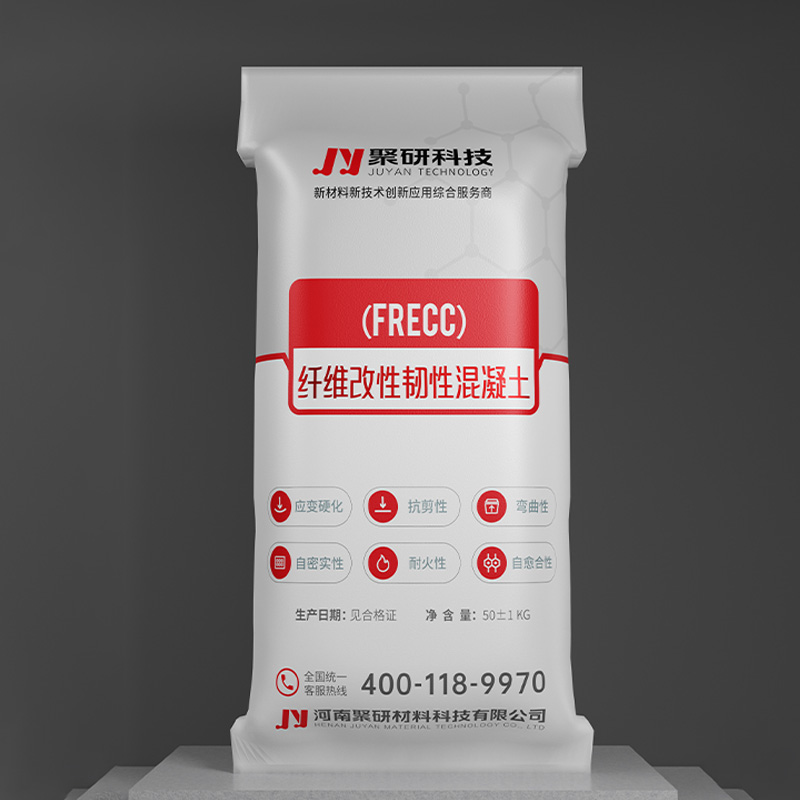
FRECC (Fiber Reinforced Engineered Cementitious Composite) is a cementitious composite material with cement or cement and filler or fine aggregate with a particle size of not more than 5mm as the matrix and fibre as the reinforcing material, usually referred to as ECC. ECC has ultra-high toughness, which is a great advantage in enhancing the safety, durability and sustainability of structures. ECC has super high toughness and has great advantages in enhancing the safety, durability and sustainability of structures.
FRECC (Fiber Reinforced Engineered Cementitious Composite) is a cementitious composite material with cement or cement and filler or fine aggregate with a particle size of not more than 5mm as the matrix and fibre as the reinforcing material, usually referred to as ECC. ECC has ultra-high toughness, which is a great advantage in enhancing the safety, durability and sustainability of structures. ECC has super high toughness and has great advantages in enhancing the safety, durability and sustainability of structures.
2. Product Characteristics
Tensile strain value greater than 3%
Saturated state of multi-point cracking crack width of 3mm
Strain capacity of 3%-6%, up to 8%
Energy-consuming capacity of the conventional fibre concrete 3 times
Significantly improve the structural ductility
Significantly reduce the energy-consuming capacity
Significantly improve the resistance to erosion
Significantly increase the resistance to impact
Significantly increase the resistance to abrasion
In the earthquake-resistant structures, large deformation structures, impact-resistant structures and restoration of the structure has a broad prospect for development. Development prospect.
3. Product Characteristics
Strain hardening:
The uniaxial tensile initial cracking load is basically comparable with plain concrete, the ultimate tensile strain is close to 500 times that of ordinary concrete or traditional FRC, showing great toughness. The ultra-high tensile strain capacity corresponds to multiple fine cracks on the test specimen, and the tensile stress-strain curve shows obvious strain hardening characteristics from cracking to peak load.
Strain hardening:
The uniaxial tensile initial cracking load is basically comparable with plain concrete, the ultimate tensile strain is close to 500 times that of ordinary concrete or traditional FRC, showing great toughness. The ultra-high tensile strain capacity corresponds to multiple fine cracks on the test specimen, and the tensile stress-strain curve shows obvious strain hardening characteristics from cracking to peak load.
Shear Performance and Energy Absorption:
At a shear-to-span ratio of 1, the shear capacity of the ECC beams without shear reinforcement is 42.67% higher than that of the concrete beams, and the deformation capacity is 2.25 times higher, with obvious ductile characteristics in the damage mode.
At a shear-to-span ratio of 1, the shear capacity of the ECC beams without shear reinforcement is 42.67% higher than that of the concrete beams, and the deformation capacity is 2.25 times higher, with obvious ductile characteristics in the damage mode.
Flexural properties and toughness of thin slabs:
ECC thin slabs under bending moment, strain hardening after initial cracks are produced along with multi-seam cracking, deflection increases but does not yield, high flexural toughness, also known as bendable concrete.
ECC thin slabs under bending moment, strain hardening after initial cracks are produced along with multi-seam cracking, deflection increases but does not yield, high flexural toughness, also known as bendable concrete.
Self-compacting properties:
has excellent self-compacting properties due to the high cement paste - aggregate ratio and small aggregate particle size (mainly composed of quartz sand).
has excellent self-compacting properties due to the high cement paste - aggregate ratio and small aggregate particle size (mainly composed of quartz sand).
Fire resistance:
PVA fibres dissolve at high temperatures to form water vapour migration channels, releasing the vapour pressure of the ECC elements and preventing the cement matrix from disintegrating and destroying them, resulting in excellent fire resistance.
PVA fibres dissolve at high temperatures to form water vapour migration channels, releasing the vapour pressure of the ECC elements and preventing the cement matrix from disintegrating and destroying them, resulting in excellent fire resistance.
Self-healing properties:
Self-healing capabilities enhance the durability of ECC in changing environments.
Self-healing capabilities enhance the durability of ECC in changing environments.
4. Performance Indicators
ECC compressive and flexural strength test results
| Test Material | Compressive Strength (MPa) | Flexural Strength (MPa) | Elastic Modulus (GPa) |
|---|---|---|---|
| 7d 14d 28d 56d | ≥130 | ≥120 | |
| ECC | 20.7 26.8 35.9 45.3 | The content you provided is already in English. | The content you provided appears to be a symbol or a code rather than a translatable text. Please provide a complete text or context for translation. |
Test results of axial tensile strength and ultimate elongation of ECC materials
| Test Material | Axial Tensile Strength (MPa) | Ultimate Elongation (%) |
|---|---|---|
| 7d 28d | 28d | |
| ECC | 2.53 4.35 | 4.57 |
ECC material carbonisation and frost resistance test results
| Test Material | Age (d) | Carbonation Depth (mm) at Various Carbonation Durations | Mass Loss (%) | Relative Dynamic Elastic Modulus (%) | Frost Resistance Grade (%) |
|---|---|---|---|---|---|
| 7d 28d | 0.77 | 90.4 | F300 | ||
| ECC | 28 | 5.0 8.0 |
5. Areas of Application
Surface repair of dams:
The ECC microcrack structure can be used for surface repair of dams as it shows superior shielding properties and improves impermeability.
Seismic strengthening of buildings:
Under alternating loads, ECC - reinforced composite structures can absorb a large amount of energy, and their application in the main frame structure of high-rise buildings improves the energy absorption capacity and reduces post-earthquake repairs.
Surface Repair of Retaining Walls:
is aesthetically suitable for surface repair of broken concrete structures based on its micro-cracked structure.
Surface repair of irrigation canals:
is used for surface repair of irrigation canals that have been damaged by abrasion over decades of service.
Bridge decks:
Due to the good tensile properties of ECC, thin section ECC and steel plate composite structures have a higher flexural strength than normal steel-mix structures and are used for bridge decks.
Surface repair of dams:
The ECC microcrack structure can be used for surface repair of dams as it shows superior shielding properties and improves impermeability.
Seismic strengthening of buildings:
Under alternating loads, ECC - reinforced composite structures can absorb a large amount of energy, and their application in the main frame structure of high-rise buildings improves the energy absorption capacity and reduces post-earthquake repairs.
Surface Repair of Retaining Walls:
is aesthetically suitable for surface repair of broken concrete structures based on its micro-cracked structure.
Surface repair of irrigation canals:
is used for surface repair of irrigation canals that have been damaged by abrasion over decades of service.
Bridge decks:
Due to the good tensile properties of ECC, thin section ECC and steel plate composite structures have a higher flexural strength than normal steel-mix structures and are used for bridge decks.