
Product Introduction
1. Product Introduction
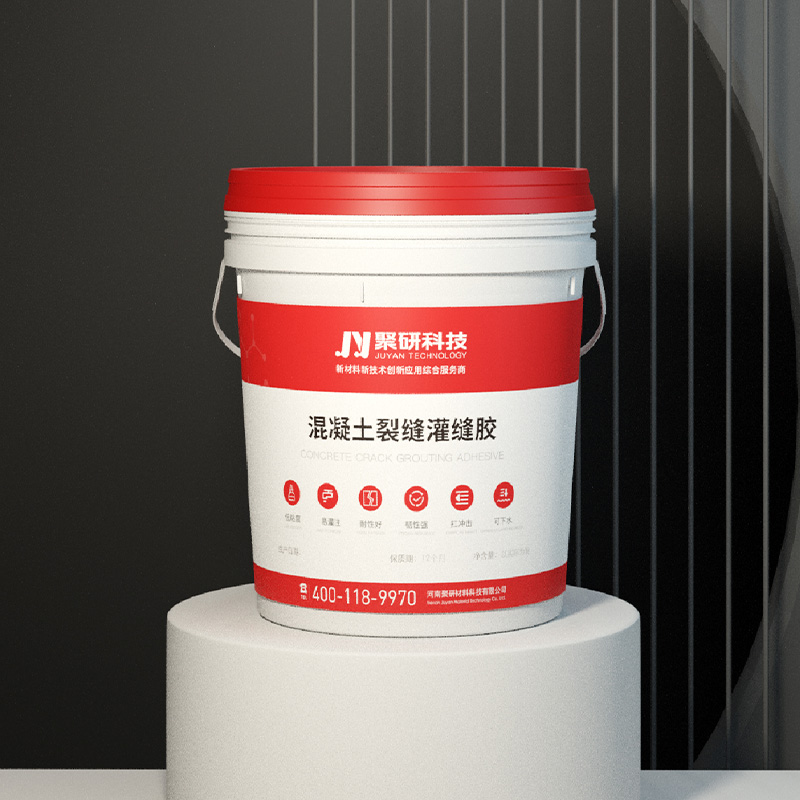
This product is a two-component modified epoxy resin structural adhesive, component A is dark grey paste, component B is dark brown paste. When using A:B component according to the ratio of 2:1 can be mixed evenly.
This product is a two-component modified epoxy resin structural adhesive, component A is dark grey paste, component B is dark brown paste. When using A:B component according to the ratio of 2:1 can be mixed evenly.
2.Features
Fast curing
Dynamic load resistant
High strength
Fatigue resistant
Media resistant
High thixotropy
Ageing resistant
Easy to work with
Fast curing
Dynamic load resistant
High strength
Fatigue resistant
Media resistant
High thixotropy
Ageing resistant
Easy to work with
3.Construction Process
Inject the low-viscosity, high-strength crack repair adhesive solution into the crack cavity with a certain pressure; this method is suitable for the reinforcement and closure of 0.1mm to 1.5mm stationary independent cracks, penetrating cracks, and honeycomb-like local defects. Before injection, seal the periphery of the crack.
Crack treatment:
For cracks on concrete members, use wire brush and other tools to remove dust, scum and other dirt on the surface of the cracks, then use compressed air to blow out the dust in the cracks, and finally wipe the surface of the cracks with cotton wool dipped in acetone.
For cracks on concrete members, use wire brush and other tools to remove dust, scum and other dirt on the surface of the cracks, then use compressed air to blow out the dust in the cracks, and finally wipe the surface of the cracks with cotton wool dipped in acetone.
Paste glue base:
For the floor and wall with penetrating joints and thickness greater than 120mm, glue base should be pasted on both sides respectively; for the floor and wall with thickness less than 120mm, glue base should be pasted on one side only. Apply a layer of seam sealing adhesive evenly around the bottom of the base, and install the base at a distance of 200-300mm.
For the floor and wall with penetrating joints and thickness greater than 120mm, glue base should be pasted on both sides respectively; for the floor and wall with thickness less than 120mm, glue base should be pasted on one side only. Apply a layer of seam sealing adhesive evenly around the bottom of the base, and install the base at a distance of 200-300mm.
Seal the joints:
Use a batch knife to scrape the sealant onto the cracks with a thickness of about 1mm and a width of 20-30mm, preventing small holes and air bubbles when smearing the sealant, and scraping it flat to ensure that the sealing is tight and reliable.
Use a batch knife to scrape the sealant onto the cracks with a thickness of about 1mm and a width of 20-30mm, preventing small holes and air bubbles when smearing the sealant, and scraping it flat to ensure that the sealing is tight and reliable.
Gluing:
According to the proportion and required amount of grouting adhesive instruction manual to extract the A material and B material were stirred to eliminate the sediment A and B material into the mixing container, mixing and stirring until the colour is uniform and then use. The amount of glue should not be too much at one time, and it should be used up in 40-50 minutes.
According to the proportion and required amount of grouting adhesive instruction manual to extract the A material and B material were stirred to eliminate the sediment A and B material into the mixing container, mixing and stirring until the colour is uniform and then use. The amount of glue should not be too much at one time, and it should be used up in 40-50 minutes.
Grouting:
Put the prepared grouting glue into the syringe, vertical cracks according to the order from the bottom to the top, horizontal cracks according to the order from one end to the other end of the grouting. Start from the first base to inject, to be the second injection base out of the glue, with the back plug will be the first base into the glue mouth blocking, and then from the second injection base injection, and so on in this order. The last glue base is for exhausting, no glue can be injected.
Put the prepared grouting glue into the syringe, vertical cracks according to the order from the bottom to the top, horizontal cracks according to the order from one end to the other end of the grouting. Start from the first base to inject, to be the second injection base out of the glue, with the back plug will be the first base into the glue mouth blocking, and then from the second injection base injection, and so on in this order. The last glue base is for exhausting, no glue can be injected.
Remove the base:
After the end of filling, the base should not be disturbed within 24 hours, and the base can be removed after 3-5 days.
After the end of filling, the base should not be disturbed within 24 hours, and the base can be removed after 3-5 days.
Adjustment of colour difference:
According to the need, you can choose to sand or paint the cement-based paint to adjust the colour difference after glue injection.
According to the need, you can choose to sand or paint the cement-based paint to adjust the colour difference after glue injection.
4. Material Performance Indicators
| Performance Item | Performance Indicator |
|---|---|
| Physical Performance | |
| Specific Gravity, g/cm³ | 0.9~1.0 |
| Pot Life, min | ≥30 |
| Curing Time, days | ≤7 |
| Colloid Performance | |
| Tensile Strength, MPa | ≥20 |
| Compressive Strength, MPa | ≥50 |
| Tensile Elastic Modulus, MPa | 1500 |
| Bonding Performance | |
| Steel-Steel Shear Strength, MPa | ≥10 |
| Aging Performance | 90d, Steel-Steel Shear Strength Reduction Rate ≤10% |
| Environmental Performance | This product complies with Limits of Hazardous Substances in Adhesives for Indoor Decoration Materials |